Understanding the Evolution and Impact of Machine Learning
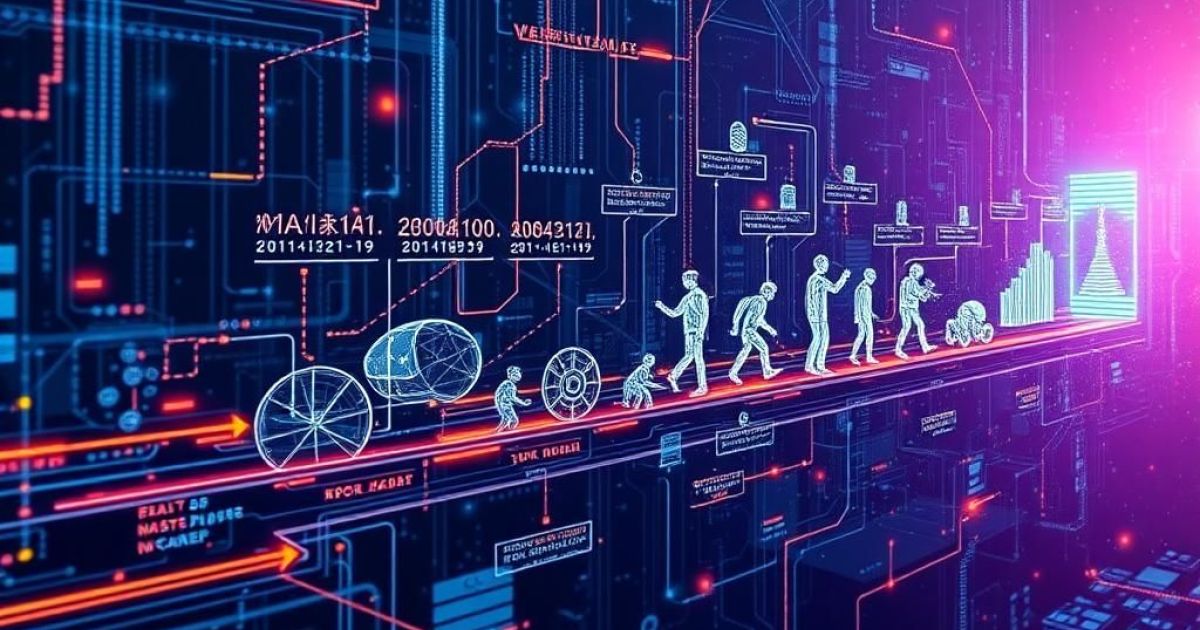
Understanding the Evolution and Impact of Machine Learning
Machine learning has fundamentally transformed the technological landscape, emerging as one of the most influential innovations of the modern era. This sophisticated branch of artificial intelligence has evolved from a theoretical concept to a powerful tool that drives innovation across countless industries and sectors.
Historical Development of Machine Learning
The journey of machine learning began in the 1950s when pioneers like Arthur Samuel first introduced the concept of computers learning without explicit programming. During these early years, the field was primarily theoretical, limited by computational power and data availability. The 1980s marked a significant turning point with the emergence of more sophisticated algorithms and the introduction of neural networks, laying the groundwork for modern machine learning applications.
Key Evolutionary Milestones
- 1950s: Introduction of basic machine learning concepts
- 1960s: Development of early pattern recognition algorithms
- 1980s: Emergence of neural networks and backpropagation
- 1990s: Rise of practical applications in data mining
- 2000s: Breakthrough in deep learning architectures
- 2010s: Explosion of big data and cloud computing capabilities
Core Components of Modern Machine Learning
Today’s machine learning systems represent a complex interplay of various technological components. At their core, these systems rely on sophisticated algorithms that process vast amounts of data to identify patterns and make predictions. The advancement in computational power and the availability of massive datasets have enabled increasingly complex applications, from image recognition to natural language processing.
Types of Machine Learning Approaches
| Approach | Description | Primary Applications |
|---|---|---|
| Supervised Learning | Learning from labeled data | Classification, Prediction |
| Unsupervised Learning | Finding patterns in unlabeled data | Clustering, Anomaly Detection |
| Reinforcement Learning | Learning through trial and error | Robotics, Game AI |
Impact Across Industries
The influence of machine learning extends far beyond the technology sector. In healthcare, predictive analytics are revolutionizing disease diagnosis and treatment planning. Financial institutions leverage machine learning for fraud detection and risk assessment. Manufacturing facilities employ it for predictive maintenance and quality control. This widespread adoption has created new opportunities while simultaneously raising important questions about automation and workforce evolution.
Transformative Applications
Perhaps the most visible impact of machine learning is in everyday consumer applications. From personal digital assistants to recommendation systems, machine learning algorithms have become deeply integrated into our daily lives. These systems continuously learn from user interactions, becoming more sophisticated and personalized over time. The development of autonomous vehicles represents another frontier where machine learning is pushing the boundaries of what’s possible.
Challenges and Future Perspectives
Despite its remarkable progress, machine learning faces several significant challenges. Data privacy concerns, algorithmic bias, and the need for transparent and explainable AI are critical issues that researchers and practitioners must address. The environmental impact of training large models and the computational resources required present additional challenges that require innovative solutions.
Emerging Trends
Looking ahead, several exciting developments are shaping the future of machine learning. Quantum computing promises to revolutionize machine learning capabilities, while edge computing enables more efficient and private data processing. The integration of machine learning with other emerging technologies like blockchain and Internet of Things (IoT) opens new possibilities for distributed and secure learning systems.
Ethical Considerations
As machine learning systems become more prevalent and powerful, the ethical implications of their deployment demand careful consideration. Issues of fairness, accountability, and transparency are paramount. The potential impact on employment, privacy, and social equality requires ongoing dialogue between technologists, policymakers, and the public to ensure responsible development and implementation.
Conclusion
Machine learning represents a transformative force that continues to reshape our world in profound ways. Its evolution from theoretical concept to practical application has created unprecedented opportunities while raising important questions about the future of human-machine interaction. As we move forward, the continued development of machine learning technologies will undoubtedly bring new challenges and opportunities, requiring careful consideration of both technical and ethical implications.














Laisser un commentaire